Wednesday, July 17, 2013

GMO Labeling – What can you do?

As you know (or may not know, in which case check out our Blog on GMO foods here), a GMO is a Genetically Modified Organism. The issue of GMO-labeling is a major one here in the United states, and GMO-labeling bills have already passed in Connecticut and Maine. We fully expect more to pass in many more states across country.
gmo free
Companies like Coca-Cola, Pepsi, Kraft, Kellogg’s, and General Mills have spend millions of dollars trying to fight the passage of these bills, even though they already label GMO-foods in more than 64 countries across the globe (by the way, this includes all of Europe, Russia, China, India, South Africa, and Syria).
Just this last year, Prop 37 to label GMO’s in California. Monsanto was the top contributor, with around $8million. Pepsi was 2nd with around $2 million, and Kraft and Coke following with $2 million and $1.7 million respectively. The question remains – why would these companies be so opposed to telling us what is in our food??? The American people have consistently shown that 90% would support GMO-labeling of foods. 26 states have introduced legislation just this year to pass GMO-labeling laws. It seems like a pretty clear case of demand – so where is the supply?
We like the website: http://www.fooddemocracynow.org/ for information regarding upcoming and ongoing legislation around GMO-food labeling. They are up-to-date with their information and gaining more and more influence every day. Washington State has introduced “Initiative 522″, and is already garnering some real opposition. There is already $1 million in opposition from Monsanto, Dow, The Grocery Manufacturer’s Association, DuPont, and Bayer.
However, the “Yes” group is gaining momentum too, and this looks like it could actually pass. For more information, check out Food Democracy Now’s website, above.

Tuesday, July 16, 2013

Flowers form on my tomatoes, but they never turn into fruit – Why?

If you’ve grown tomatoes or peppers for any length of time, chances are you’ve had this situation: your plants look great, flowers form, and then they . . . drop. No tomatoes. What?!?!?!
Blossom drop, as it’s commonly called, is usually caused by a sudden change in temperature, or when you see daytime temperatures above 95° Fahrenheit and nighttime temperatures above 75° Fahrenheit, nighttime temperatures below 55° Fahrenheit. Most commonly you will see this issue from heat. The tomato or pepper won’t be able to sustain the fruit, so they don’t produce it. They will, however, produce fruit once there is a cool-down. This can also be made worse by a lack of moisture and/or high winds.
blossom drop
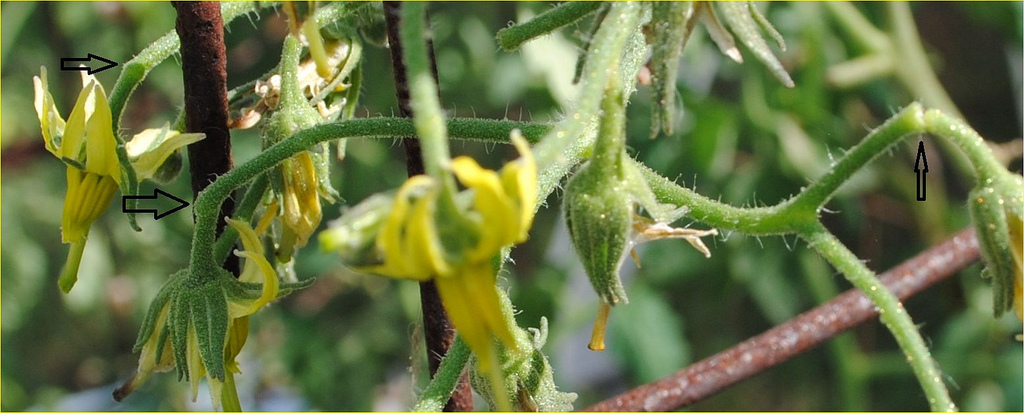
Looking in the picture above, on the left are two healthy tomato branches. You can see the swollen area with an arrow pointing to it. This stem will produce fruit. See the broken area on the right with the arrow pointing to it? This will not produce fruit, and is breaking because of Blossom Drop. A healthy tomato branch will be swollen and full, like the non-broken one above.  If the plant can’t sustain any additional fruit, it will drop the rest of the flowers as seen above.
So what can you do? Well, mulch is a great way to keep your plants warm if you are expecting a temperature drop. In the case of lack of moisture, obviously you want to water consistently. Hoop tunnels with shade cloth are a great way to regulate daytime temperatures.
Hoop tunnel with shade cloth
hoops_shade
The one thing you can do to aid your plants to be able to produce fruit when the temperature allows is to make sure they are fully fed. You want to make sure you give them plenty of Nitrogen, so they are healthy and happy when the time comes to produce fruit.
Amino Acids are an excellent organic source of Nitrogen to aid your plants – we sell it for only $12.00 per pound! You can use Amino Acids as a Foliar spray, soil additive, or hydroponically. Also, our Extreme Blendhas a wonderful Nitrogen content (from Amino Acids), as well as our soluble Humic AcidFulvic Acid, andKelp.
All these products will help, and your plants will thank you for it. Once they are able to produce fruit, you can increase their yield by making sure they are prepared. You can also use Compost tea for this, and we have an awesome starter kit to get you going.

Monday, July 15, 2013

Mycorrhizae – a fascinating fungi . . .

So you know we sell Mycorrhizae. And you hear quite a bit about it, but no one ever tells you what Mycorrhizae actually IS. In short – it’s a fungus. But there is so much more to it than that.
In researching Mycorrhizae, I was stunned to learn how much plants actually depend on these fungi to thrive. Soil, especially when it is nutrient-deficient, is made so much more valuable by the addition of Mycorrhizae.
There are a few different classifications of Mycorrhizae – Ecto and Endo being the most popular. Basically, theEctomycorrhizae variety forms a sheath around your plant roots. Endomycorrhizae actually penetrate the roots of your plants. But what do they really do? And isn’t it bad to have fungus in your soil?
NO. It’s not at all bad to have certain fungi in your soil. There is a very healthy, symbiotic relationship that occurs between your plants and Mycorrhizae. One huge benefit of Mycorrhizae is they increase your plants ability to uptake what water and nutrients there are from the soil.So if you don’t have the greatest soil, Mycorrhizae will help your plants get as much as possible from it. Also, because of the ability to make the most of the water in the soil, this will help your plants be more drought resistant.
One really cool thing Mycorrhizae do is to send out microscopic shoots from the plant roots. These will help to break up the soil and increase air and water into the root zone. In excessively sandy soil, it will bind together to hold more moisture.
Mycorrhizae will also enhance the rooting of your cuttings, help increase root generation, increase salt tolerance, and even reduce transplant shock. These are hugely beneficial fungi. They have been found in the roots of plants up to 400 million years old – that’s crazy!
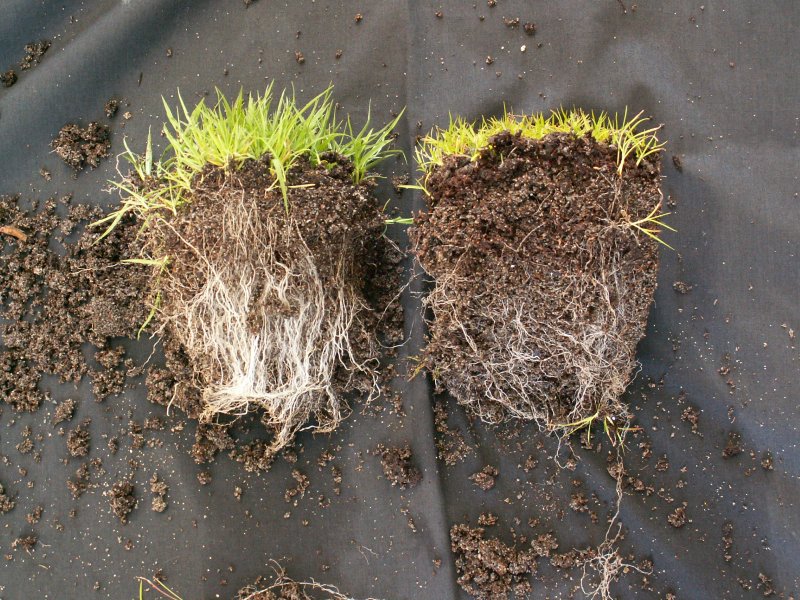
The cutting on the left was treated with Mycorrhizae. The cutting on the right was not.
bermudaleftwithmyco-2
Another huge benefit of Mycorrhizae is they are sustainable. This addition of Mycorrhizae actually improves your soil year after year, instead of depleting it like so many commercial fertilizers do. Indeed, Mycorrhizae are not a fertilizer – they are an addition of a symbiotic fungi to help your plant be more self-sufficient.
Mycorrhizae
Mycorrhizae
One other fungi that deserves mention here (especially since we have it in a combo pack with our Mycorrhizae) is Trichoderma. Trichoderma are fungi which are naturally occurring in soil as well, and help to suppress plant pathogens and have been in use and studied extensively since the 1920′s.
Trichoderma produces antibiotic substances, and since the Trichoderma colonize the plant roots (and will also sometimes penetrate the roots), this helps the plant to resist disease. Trichoderma can actually dissolve the cell wall membranes of other pathogenic fungi that may attempt to infect your plants.
Trichoderma can also aid hydroponic growth through their ability to increase the plants’ ability to uptake several nutrients, including copper, phosphorus, iron, and sodium.
Trichoderma
trichoderma

So it sounds like these might be kind of difficult to deal with, considering they are live. But really, it’s very simple. For the both the regular Endo Mycorrhizae and the Trichoderma and Mycorrhizae blend we sell, simply 1 dry ounce with 1 gallon of water, and spray well. This will cover about 150 square feet. You can also use this mixture for a root dip or a transplanting aid. One thing to remember – don’t store this product for more than two days once it has been mixed; use the product within 12 months of delivery, and store it in a cool, dry area. TheEndo Mycorrhizae is only $14.36 for 4 ounces, which will make 4 gallons of product. Myco and Tricho blend is only $8.50 per ounce.
As always, if you have any questions, please call us! 208-346-7194.

Thursday, July 11, 2013

Featured products – Bloom and Grow Packs

So you may wonder – what would be the easiest product you can purchase from Kelp4Less to give your plants everything they need? Even with our prices, do you really have to spend ALL that money to get an all-inclusive product? Well – nope. :) Allow me to introduce you to our Bloom and Grow Packs.
We have pre-mixed everything in our Feed Charts so you can buy ONE product, not 14 (plus all the trace minerals). We even separated our Bloom Pack into Early, Mid, and Late Bloom packs if you want to be very specific. Otherwise, you can keep it simple and just do our Grow pack for the growing stages of your plants’ life, and the Bloom pack when you are ready to see blooms (fruits, flowers, buds, etc).
So let me break it down for you – in a previous blog, we talked about the Grow vs. Flower/fruit stage in your plants’ life cycle. Well, we went ahead and developed an all-inclusive nutrient pack for you to use to aid in the growth and/or fruit/flower/bud production of your plant. So – the Grow Stage. Obviously, we want you to use our Grow Pack.

Grow Pack

Grow-Pack-720x720
The nice thing about our Grow Pack is it includes absolutely everything you need to promote healthy growth. The dry analysis is 10-4-10, and this pack includes the following: 4-18-38Calcium NitrateMagnesium SulfateAminosMyco ++SilicaKelp and Humic Blend, and Molasses.
To mix the grow pack in a 50 gallon reservoir, all you do is combine a pound of Grow Pack. Done. A pound of Grow Pack is only $21.46. If you aren’t running that large an operation (maybe you just do a backyard garden, like me!), you can also just do 1 tsp per gallon if you are growing in soil. If you are growing in a neutral medium – not soil – you can do 2 tsp per gallon, and feed once per week. For this type of application, you may only want the 8 ounce pack, which is only $13.46.
The flowering/bloom cycle is going to require some different nutrients. So we took everything from our Feed Chart for your Bloom cycle and pre-mixed it, as well! It’s our Bloom Pack:

Bloom Pack

Bloom Pack Bundle

Our bloom pack is excellent to help you help your plant to get the best out of its’ Bloom, or Flowering cycle. This pack contains everything your plants need for large, abundant blooms. This pack contains MKP, Calcium Nitrate, Magnesium Sulfate, Extreme Blend, Myco ++, Silica, Kelp and Humic Blend, Molasses, and Ripe Blend.
The Bloom Pack is mixed basically the same way as the Grow Pack. If you are using a 50-gallon reservoir, mix in a pound of Bloom Pack. If you are going to do a smaller-scale operation, in soil, mix 1 tsp per gallon. If you are doing a neutral-grow medium, use 2 tsp per gallon. Prices are $13.46 for 8 ounces, or $21.56 for a pound.
We would love love LOVE some pictures from you of your results with our grow packs! Don’t hesitate to send them to us!
Thanks for all your support folks, we love you!

Wednesday, July 10, 2013

Facebook contest - woot WOOT!

Yay! We're running a contest on our Facebook page (find us at www.facebook.com/kelp4less). Like our page and be entered to win $50 worth of FREE Kelp4Less product! Contest is running through July 15th, 2013. All "Likes" before 5:00 p.m. will be entered to win!

Monday, July 8, 2013

Hardy-har Har. . . what’s a hardiness zone?

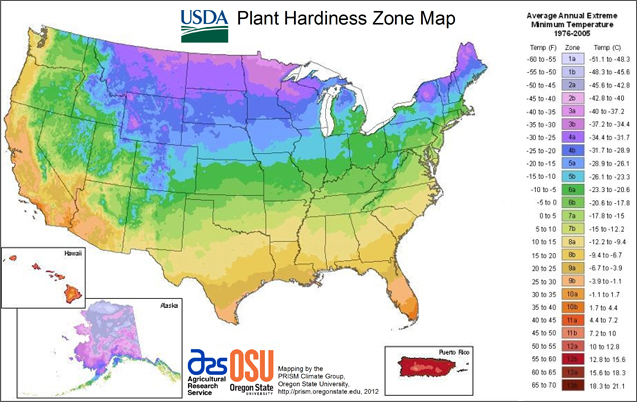
On the back of seed packets, there is usually a range of numbers. To the beginning gardener, they seem a lot like gibberish, but they are actually very important.  These numbers indicate the Hardiness Zone a plant will do the best in. The zones range from 1 – 13b, and they are based on a minimum winter temperature, divided into 10° Fahrenheit zones. For those of you wondering, yes – the addition of zones 12 and 13 is relatively new (2012). This will prevent you from trying to grow oranges outside in Idaho, for instance. Citrus usually does best in hardiness zones 8-10, while Idaho ranges from 3 – 7b.
Hardiness Zones
hardiness_map
There is, of course, some deviation that is okay as long as you are aware what hardiness zone your plant will thrive in. If you know this, you can re-create the conditions it needs to be a healthy, happy plant. But, here are some general recommendations for what to grow in your hardiness zone. I found a wonderful plant finder on this website: http://www.hgtvgardens.com/plant-finder/. All you have to do is type in your hardiness zone (or a range of them) and it comes up with an entire list of plants to grow. If you have certain plants in mind it’s easier, simply because you can see if they will work for your zone. If you are just looking for ideas, I love this tool. Also, you can search if a certain type of plant (for example, oranges) will do well in your hardiness zone.
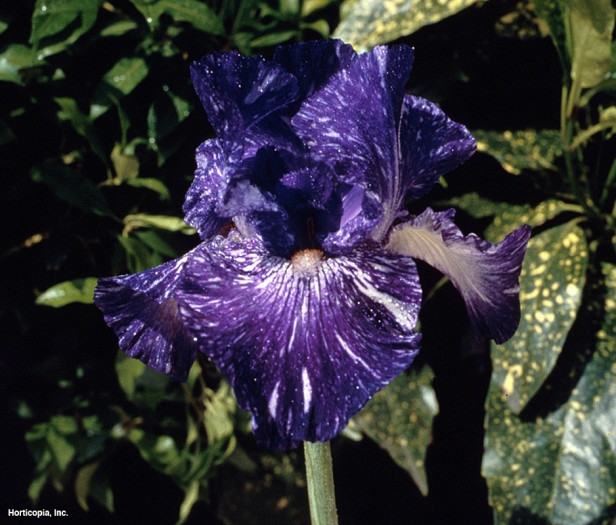
Zones 1-4b (coldest part of winter is between -60° and -20° Fahrenheit – brrrrr). Best plants to grow include Alaska Cedar, Black-eyed Susan, Foxglove, Daisies, Hollyhock, Clematis, and Iris varieties.
Iris
bearded iris
Zones 5-9a (coldest part of winter is between -20° and +25° Fahrenheit). Best plants include Aloe Vera (an awesome plant to use for sunburns, btw), Flowering Kale, Peace Lily, Sweet Potato Vine, and Absinthe.
Flowering Kale
flowering kale
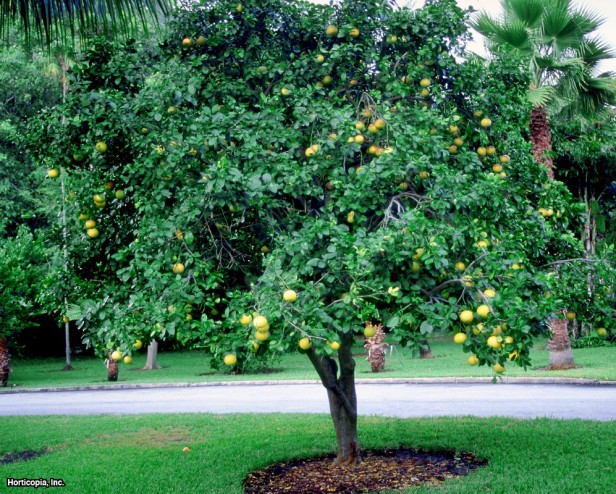
Zones 9b-11b (coldest part of winter is between 30° and 50° Fahrenheit). Best plants include Acacia, Agave, Strawberry, Tangerines, Oranges, Grapefruits.
Grapefruit
grapefruit
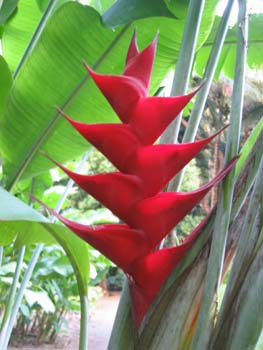
Zones 12-13b are pretty hostile for growing. Coldest part of winter is 50°-70° Fahrenheit. Best plants include Azaleas, Heliconia caribaea (super-cool), Sugar Cane, and Tobacco.
Heliconia caribaea
heliconia

These are only guidelines, of course. Many plants do well across multiple hardiness zones, and you can always use a season extender (aka greenhouse) in your colder climates, and shade cloth in the warmer. This is just a handy, hopefully informative general guideline to hardiness zones.

Monday, July 1, 2013

Why go Organic?

What is the big deal about going organic? Why is everyone talking about it? Does it really matter that much? Well, in short – yes. It does.
For the younger crowd out there, you may not remember the big deal about DDT. This was a very widely-used pesticide for a long time. We finally figured out it was incredibly toxic by looking at birds’ eggs who were ingesting it. DDT was actually making their shells soft, and the baby birds were dying. The sad thing is, DDT’s use has been banned in the U.S. since 1972, but we are still seeing the effects today. And not every country has banned its’ use, so there are ongoing effects. DDT specifically takes around 15 years to break down.
So why is that relevant? Well, because we used this pesticide for decades (since about 1940), and we (meaning the EPA and/or FDA) didn’t sufficiently test the side effects. With this in mind, many folks are concerned about the pesticides we are using now, as well as the stronger (!) pesticides that are being developed as a result of the GMO-foods contaminating weeds.
There is also sufficient concern about the sustainability of non-organic farming and gardening. It’s incredibly difficult to imagine being able to sustain the widespread pesticide use we are currently practicing. There is a continuous need to develop stronger pesticides, and a rush to get them on the market, which raises concerns about side effects.
So, what can you do? Basically, keep in mind when you are choosing products to use in your garden (and choosing what to buy in the store) to look for organic solutions. Organic meaning solutions you would find in nature. Rather than purchasing ant killer, use Diatomaceous earth (I just used some this morning, and the ants are gone). It’s only $9.95 for a pound, and works wonderfully. Then you aren’t using horrible chemicals around your kids and pets, and you are still taking care of the problem (it will also work with many other types of insects, such as box elder bugs, centipedes, bedbugs, etc.).

Diatomaceous Earth

Diatamacious-Earth-720x720
What about for your fertilizer? Well, we can definitely help you there. You have a multitude of choices with Kelp4Less. You can check out our OMRI-certified products, as well as those which are natural and have not gone through the OMRI certification. Organic Products from Kelp4Less.
There are so many benefits to using organic products, including peace of mind. You don’t have to worry about what is going into your body. These products will rinse off, too, unlike many GMO foods which will absorb pesticides into the plant and fruit.